

The Role of Land Use Diversification in Rural Land Investment
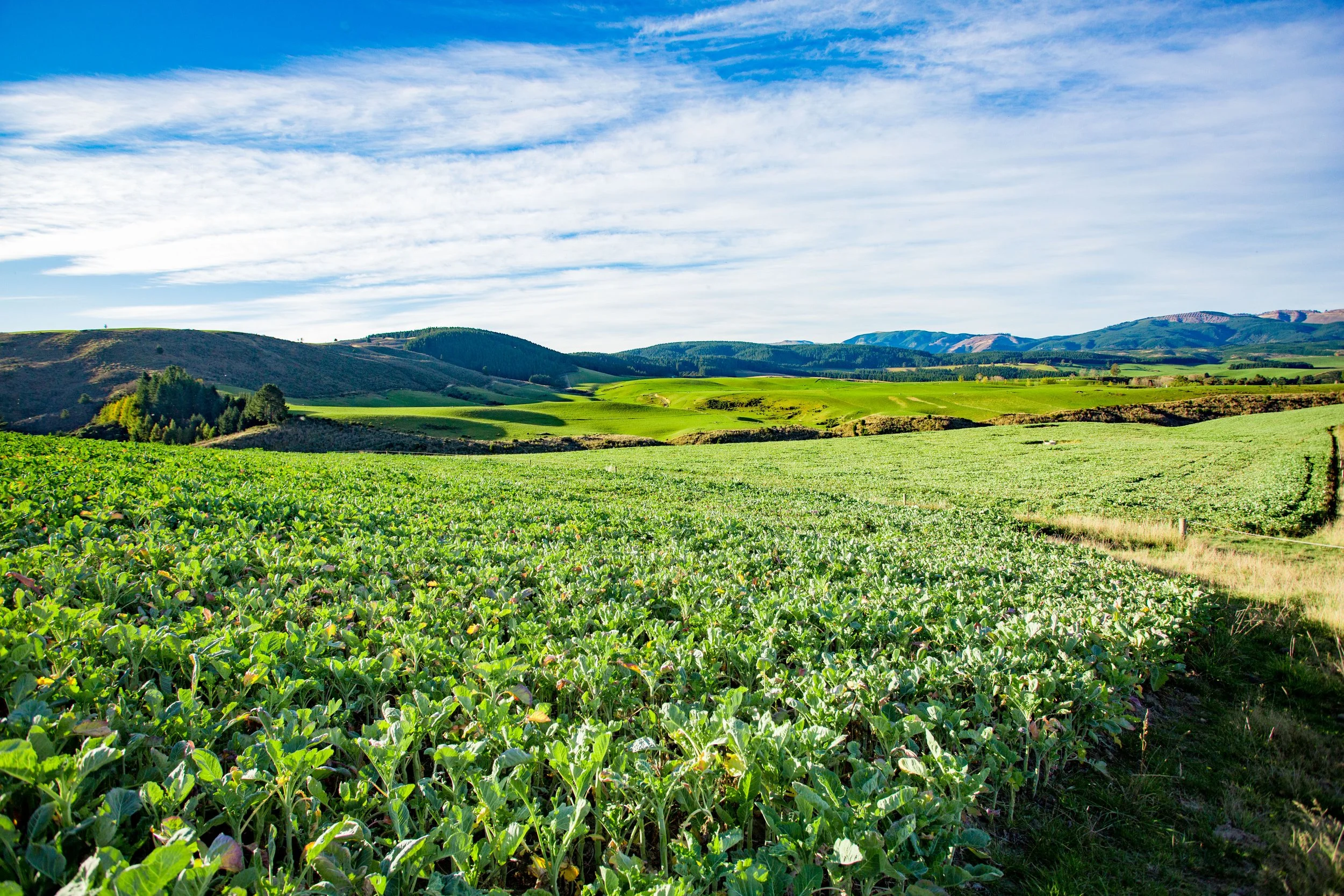
Historically, diversification in agriculture meant spreading risk. Today, it’s the engine of growth. Globally, investors are allocating more capital to productive land as a strategic asset class — a scarce, inflation-hedging real asset that generates cash yield, stores carbon and supplies a growing population. Yet most capital remains concentrated in single-use systems, an inefficiency that presents opportunity for investors, especially when coupled with New Zealand Rural Land Co’s (“NZL”) lease-based model.
Diversification across land uses
Since 2020, institutional capital has shifted heavily toward tangible, inflation-linked assets[1]. Infrastructure funds are now the fastest-growing segment of global private markets, reflecting investors’ search for inflation protection and yield stability[2]. Agricultural land, with similar inflation-hedging characteristics, is following suit[3].
At the same time, the carbon economy is monetising environmental services which are being added to balance sheets. Globally (and increasingly in New Zealand), biodiversity and natural-capital markets are emerging, early signals that land value could soon depend as much on what environmental services it provides as on what it grows. A diversified land base increases the ability to integrate these emerging revenue streams as they commercialise.
NZL’s holdings span pastoral, forestry, and horticultural land nationwide. This gives investors a strategic portfolio advantage by balancing risk and returns. While there is some shared exposure to input costs, climate and international context, each sector is exposed to different market cycles, price drivers, and climate risks. This is further supported by investing across regions, which further spreads climate risk.
Table 1 summarises indicative total returns and volatility by land use. These return estimates draw on sector-specific datasets, publicly available institutional benchmarks and professional expertise. Volatility is estimated from the standard deviation of annual export-price changes over 2015–2024, a consistent, transparent proxy for sector-level return variability.The data shows that diversification benefits are not simply about smoothing volatility, some sectors, notably horticulture, deliver both superior returns and stability. Blending these contrasting sector profiles is what drives long-term portfolio resilience.
TABLE 1
Returns alone do not capture how sectors behave together. It is important to understand the degree to which sector price cycles move independently - the foundation of true diversification. To assess how land-use returns move relative to one another, ten years of New Zealand export data (2015–2024) was analysed. Annual export prices were calculated for each sector[1] and used to derive year-on-year percentage changes. These return series provide a consistent and transparent proxy for sector cycles, enabling a robust estimation of correlations. Table 2 shows the degree to which each land-use sector moves with, or independently of, the others.
TABLE 2
The results show that pastoral sectors tend to move closely together, with strong positive correlation driven by shared exposure to global protein markets, shipping, and currency movements. Forestry shows only moderate correlation with pastoral sectors, reflecting its exposure to construction driven demand cycles rather than global protein markets. Pipfruit (apples and pears) is largely uncorrelated with pastoral or forestry returns and exhibits the lowest volatility of all sectors — making it the strongest diversification asset in the sample.
All of this suggests that sector diversification materially lowers portfolio volatility, providing investors like NZL an opportunity to spread risk and returns across multiple land uses. In portfolio terms, this diversification across land uses means NZL captures the stability of pastoral returns, the long-term carbon value of forestry, and the growth upside of horticulture
within a single inflation-linked structure. Together, these dynamics position the portfolio to perform well relative to single land use investment strategies through economic and climatic cycles for investors.
Diversification within farms
Farm-level diversification has also become more deliberate. Farmers are matching land use to soil depth, topography, and microclimates — integrating forestry on steeper ground, horticulture or arable rotations on flatter soils, and native planting along riparian zones. Research by Our Land and Water (2021)[1] found that such partial farm diversification can enhance profitability, resilience and environmental outcomes. Farmers reported stronger cashflow, reduced exposure to commodity cycles, and more flexible succession options once new land uses were integrated.
A meta-analysis by Tamepo, Manhire, & Rosin (2022)[2] found that diversification increased farm-level profitability in nearly two-thirds of the studies reviewed, primarily through improved land-use efficiency, reduced income volatility, and better utilisation of underperforming areas. Diversification can also deliver environmental co-benefits and position farms to access emerging environmental revenue streams such as carbon sequestration or biodiversity credits. Together, these findings reinforce that farm-level diversification is not simply an ecological or risk-management practice; it can materially improve economic performance.
Despite these advantages, adoption remains constrained by capital requirements, technical capability, and uncertainty over payback periods[3]. Farmers are often asset-rich but liquidity-poor; the equity needed for conversion, irrigation, or planting is locked in land value.
This is where NZL’s investment model can play a pivotal role. By separating land ownership from operations and providing long-term, CPI-linked leases, NZL gives tenants the liquidity and confidence to invest in new enterprises without taking on additional debt. Within-farm diversification therefore becomes a financed growth strategy, not a risk, and the productivity and resilience improvements achieved on-farm flow upward into more stable, inflation-protected returns at the portfolio level. When aggregated across a portfolio, these farm-level diversification decisions translate into more resilient lease performance, reduced climatic exposure, and a broader pipeline of land-use opportunities.
The capital advantage
[1] Preqin. (2024). 2024 Global Infrastructure Report. Preqin Ltd.
[2] BlackRock. (2024). Global Private Markets Outlook 2024. BlackRock Alternatives Institute.
[3] Craigmore Partners. (2024). The potential returns on New Zealand land. https://www.craigmore.com/the-potential-returns-on-new-zealand-land
[4] Dairy products were standardised by converting all quantities into milk-solids equivalents (kgMS) using MPI and DairyNZ conversion factors to ensure consistent measurement across powders, butter, cheese, liquids, and whey products.
[5] Our Land and Water National Science Challenge. (2021). Barriers to diversification. https://ourlandandwater.nz
[6] Tamepo, N., Manhire, J., & Rosin, C. (2022). Are there clear benefits from diversification of land use? A review and preliminary meta-analysis. Christchurch, New Zealand: Our Land and Water National Science Challenge; AgResearch; Lincoln University.
The constraint is not ideas or agronomic potential, it is often capital. AgFirst’s Barriers to Diversification report (2021) identified five major hurdles — skills, physical resources, production uncertainty, set-up capital, and lack of financial information — with capital ranked highest.
NZL’s scale and structure as a listed company provide access to capital that small-scale landowners rarely have. Through its lease-based model, NZL enables land-use diversification both within and across farms. For tenants, this unlocks the ability to pursue higher-return opportunities; for investors, it supports a pipeline of capital appreciation and stronger lease performance over time.
NZL’s model separates land ownership from operations. It provides liquidity to landowners and tenants by acquiring the land and leasing it back under long-term, CPI-linked agreements. That unlocks the equity trapped in farmland, allowing operators to invest in conversion, diversification, and productivity upgrades, without increasing debt. In practice, this has included examples of landowners selling to NZL to release capital for developing new cultivars and expanding high-value horticultural operations.
This structure doesn’t just lower risk for investors; it accelerates the sustainability transition. Landowners gain access to the finance needed for diversification; investors gain predictable, inflation-protected income streams backed by productive, appreciating real assets. For investors, this model delivers a defensive return profile — predictable, inflation-linked lease income backed by appreciating underlying land — while enabling tenants to pursue higher-value land uses.
Summary
For NZL investors, diversification delivers both operational uplift and portfolio resilience. Tenants unlock capital to invest in higher-value land uses, strengthening lease performance over time; investors gain access to a diversified, inflation-linked rural land base that captures the stability of pastoral systems, the long-term carbon and timber value of forestry, and the growth upside of horticulture. As natural-capital markets expand, diversified land portfolios will be best positioned to capture value from carbon, biodiversity, and ecosystem services. Diversification, in this context, is not defensive — it is a strategic foundation for long-term performance.
https://ourlandandwater.nz/publications/are-there-clear-benefits-from-diversification-of-land-use/
[7] AgFirst Consultants New Zealand Ltd (2021). Barriers to diversification: Understanding constraints to land-use change in New Zealand agriculture. Hamilton, New Zealand: Our Land and Water National Science Challenge.
https://ourlandandwater.nz/publications/barriers-to-diversification-understanding-constraints-to-land-use-change-in-new-zealand-agriculture/